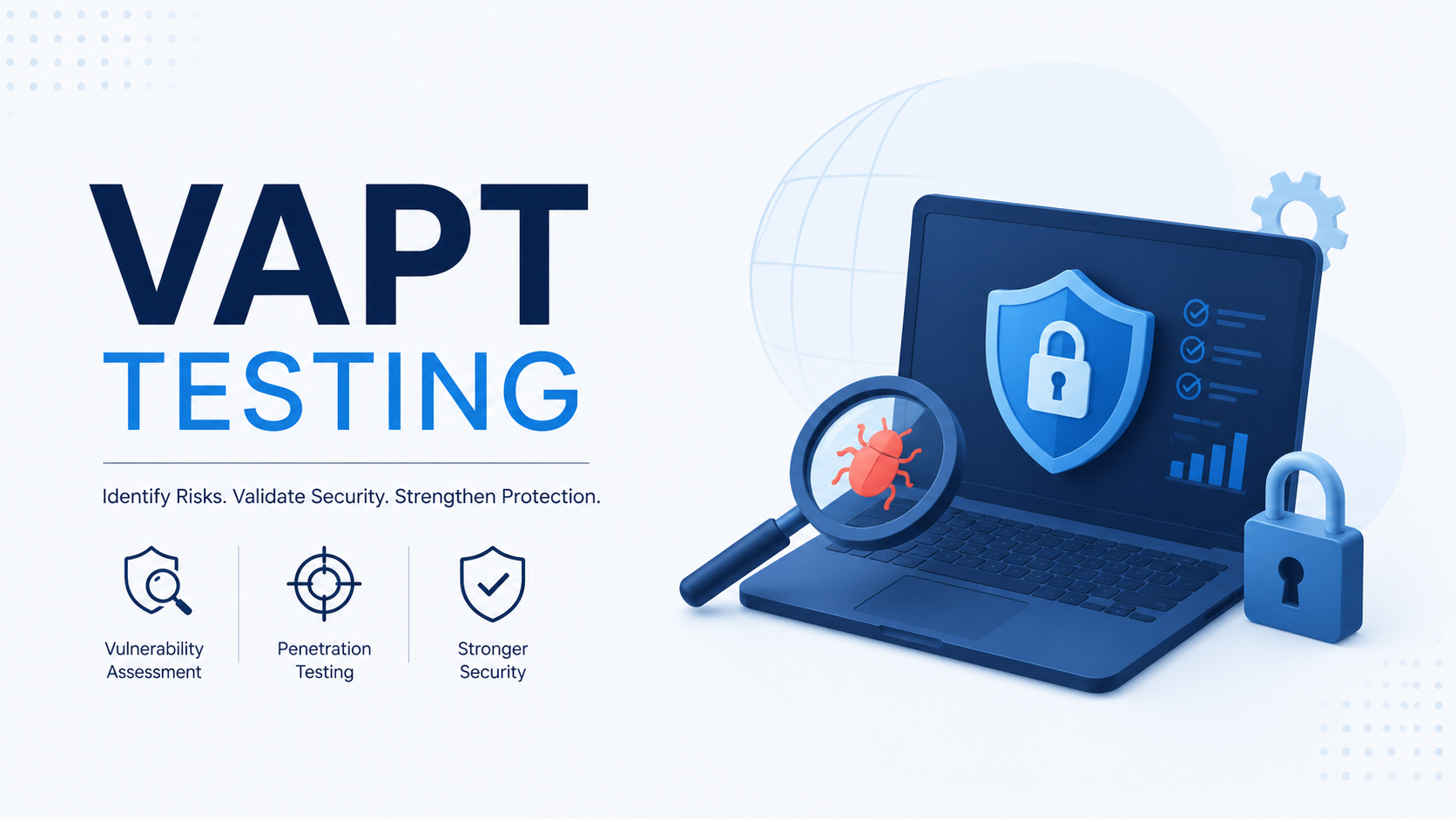
Vulnerability Assessment and Penetration Testing or VAPT testing is one of the best practices that help in detecting, assessing, and mitigating cybersecurity weaknesses. VAPT testing helps firms safeguard their IT infrastructure against potential threats and vulnerabilities.
It combines two important cybersecurity activities: vulnerability assessment and penetration testing. Together, they provide organizations with a comprehensive view of their security posture.
Importance of VAPT Testing
It play a vital role in helping companies understand what an attacker would do to penetrate their network and what resources could be compromised. This is essential in allowing the firm to take the appropriate countermeasures and secure systems, applications, and data. Businesses dealing with customers’ data, finances, intellectual property, and cloud-based applications require periodic testing to stay protected.
Testing Process
A professional VAPT has a systematic procedure that ensures the testing is done correctly.
1. The planning and scoping process begins
Organizations and penetration testers have to identify the objectives, scope, and testing requirements. The rules of engagement, timelines, communication process, and approvals need to be laid out and agreed upon during the scoping process. It is essential to ensure that testing does not cause any disruption to the business and that things are conducted without violating any policies.
2. Information Gathering
During the information-gathering phase, security personnel engage in reconnaissance to obtain information about the target environment. Information obtained can include network architecture, application, operating system, technologies, and publicly available data related to the target environment. This reconnaissance assists testers in understanding the target environment and identifying possible areas of weakness that can be explored.
3. Vulnerability Assessment
The vulnerability assessment phase includes scanning and analyzing the system under review in order to determine possible security weaknesses that could be exposed. The security tools may then identify risks related to software versions, configuration rules, access control policies, and network security features. The results of the scan are then analyzed and categorized according to priority levels and possible impacts.
4. Penetration Testing
During VAPT testing, the process of penetration testing involves cybersecurity experts trying to expose the potential vulnerabilities by attempting to penetrate a system using particular methods. The main aim is not to damage the system but rather to establish whether the weaknesses can be actually utilized.
Penetration testing can be carried out in such areas as
network security,
web applications,
mobile applications,
APIs,
cloud,
and
authentication.
This helps in understanding the level of protection offered by the existing security measures.
5. Reporting and Analysis
Upon completion of the testing phase, the security experts generate a report with the results of the performed tests, risk ratings, technical specifications, and recommendations. The report provides a comprehensive view of the findings, their potential impact, and the course of action which should be taken. It allows an organization to fully understand the vulnerabilities and address them to increase the level of cybersecurity.
6. Remediation and Retesting
The sixth step is to remedy the identified vulnerabilities. This often involves using a patch, updating, configuring, or securing access to the system, or updating the policies in place. Once this process is complete, the system can be retested to verify that the changes resolved the problems and reinforced the security of the system.
Common VAPT Testing Methodologies
Black Box Testing:
The testers conduct testing without having much information regarding the target network.
White Box Testing:
The testers acquire extensive information about the target network.
Gray Box Testing:
This is a hybrid of black box and white box testing. Organizations can choose any one of these methods depending upon their requirements.
Benefits of VAPT Testing
Detects security flaws
VAPT tests can detect weaknesses and vulnerabilities that may not be evident at first glance, allowing organizations to fix them before malicious hackers can take advantage of them.
Minimizes threats
With the information obtained from a VAPT test, organizations can identify what steps to take to prevent cyberattacks and other security threats.
Meets the requirements of industries
It is crucial that certain industries adhere to specific requirements and guidelines. VAPT testing can help certain industries meet the requirements set for them.
Protects valuable information
VAPT testing helps organizations ensure the safety of their confidential information, including their data and that of their customers.
Aids in educating employees
Reports obtained from VAPT assessments can allow IT staff, executives, and employees to understand how to improve their knowledge of cybersecurity and what to do to ensure that organizations are secure from cyber threats.
Boosts the reputation of an organization
If an organization is well-versed in cybersecurity, it can assure customers that their data is safe with them, thus boosting the company’s reputation.
Conclusion
VAPT testing can be regarded as an essential activity that allows companies to assess vulnerabilities, determine potential threats, and improve the current state of security. The overall benefits that VAPT brings to businesses include the opportunity to increase the level of protection and ensure the highest stability against various dangers.